


Panchalohalu

Generations of Fire and Faith: Life of a Pembarthy Artisan

Explore the life of a Pembarthy artisan—where fire, faith, and generations of temple metal craftsmanship shape a timeless sacred tradition.

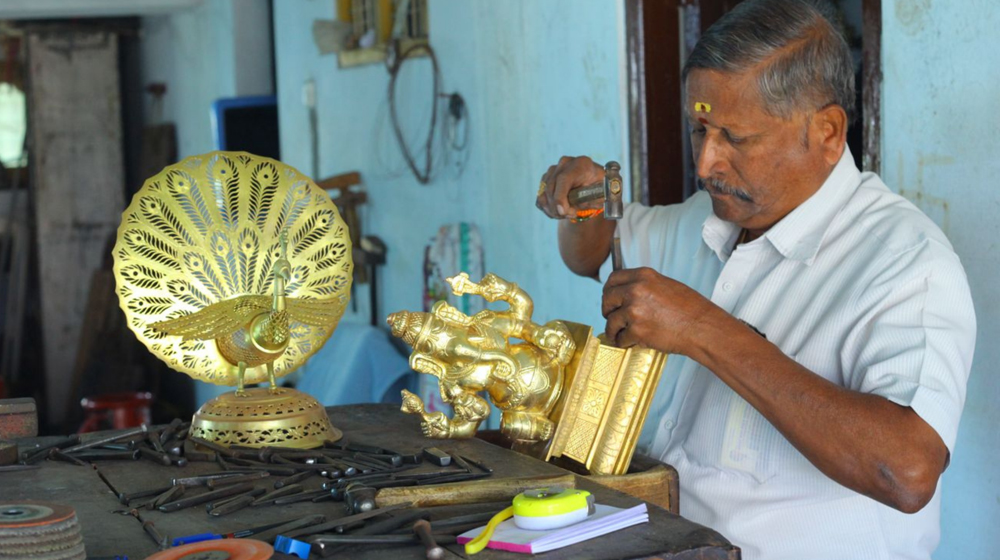
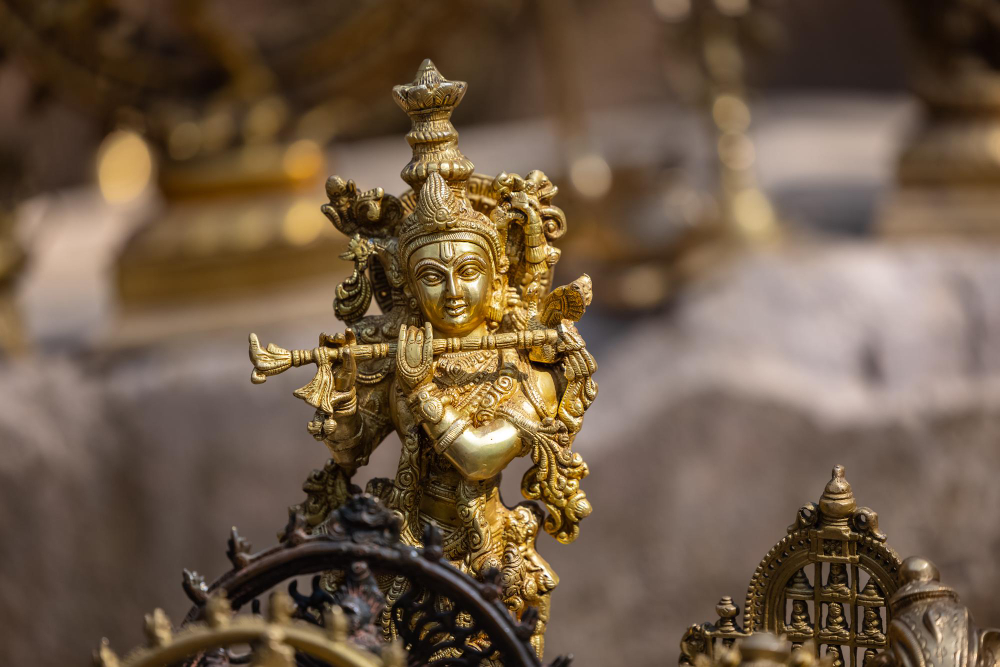
In the quiet lanes of Pembarthy, mornings do not begin with alarms—they begin with fire. The glow of molten metal, the rhythmic sound of hammer on brass, and the soft murmur of prayers mark the start of another day in the life of a Pembarthy artisan. Here, craftsmanship is not a livelihood alone; it is a sacred inheritance passed through generations.

Born Into the Furnace of Tradition

A Pembarthy artisan is shaped long before he or she touches tools. Childhood is spent watching elders prepare metal sheets, carve wax molds, and recite shlokas before beginning work. Lessons are absorbed silently—through observation, repetition, and reverence.

  • There are no manuals.
  • There are no shortcuts.
  • Only tradition, discipline, and time.

By adolescence, hands already understand the language of metal.

Fire as a Teacher, Faith as a Guide

Fire plays a central role in Pembarthy life—not just as a tool, but as a teacher. The artisan learns to read its temperament: when it must rage, when it must calm. Too much heat weakens the metal; too little ruins the form. This balance mirrors the artisan’s own spiritual discipline.

Before beginning sacred work, many artisans:

  • Observe ritual cleanliness

  • Begin the day with prayers

  • Avoid work during inauspicious times

For them, temple metal art is an act of devotion, not production.

A Day Inside the Workshop

A Pembarthy workshop is modest but alive with purpose. Each member of the family has a role:

  • Elders guide proportions and scriptural accuracy

  • Skilled hands hammer and emboss metal sheets

  • Younger artisans assist, learning through service

  • Final detailing is done slowly, patiently, without machines

Temple doors, deity panels, and sacred fittings may take weeks or months—time measured not in deadlines, but in correctness.

Crafting for the Divine, Not the Market

Unlike commercial artisans, Pembarthy craftsmen do not chase trends or volume. Their work is commissioned by temples, mutts, and heritage institutions that demand perfection.

Every line carved into metal must:

  • Follow Agama Shastra principles

  • Align with temple architecture

  • Withstand centuries of ritual use

Once installed in a temple, the artisan rarely sees the finished work again—but that is enough. The knowledge that it serves the divine is reward enough.

Legacy Written in Metal

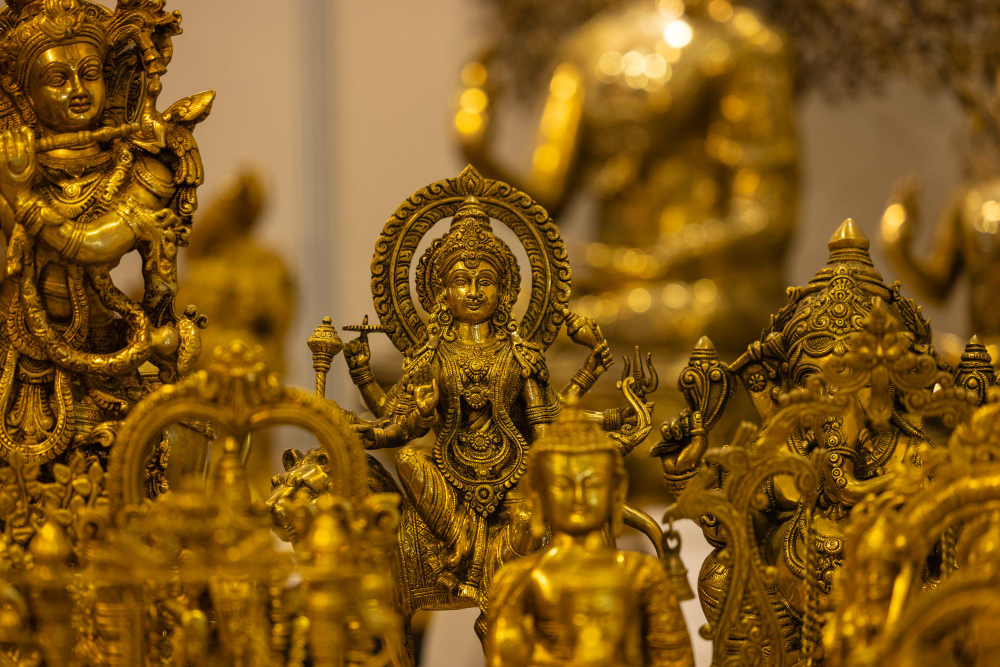
Many Pembarthy artisans can point to temples where their grandfather’s or great-grandfather’s work still stands. Brass doors darkened by time. Panels polished by generations of devotees. These are living signatures—etched not with names, but with endurance.

Recognition came eventually, including Geographical Indication (GI) status, but the artisan’s pride lies elsewhere: in continuity.

Passing the Flame Forward

As the world modernizes, Pembarthy artisans face challenges—rising costs, shrinking attention spans, and machine-made alternatives. Yet many families persist, choosing preservation over convenience.

Children still learn by watching.
Fire is still respected.
Faith still leads the hand.

Because in Pembarthy, to abandon the craft would be to break a sacred chain.

More Than an Artisan’s Life

The life of a Pembarthy artisan is a life of patience, restraint, and belief. It is the quiet assurance that when faith is forged in fire, it can outlast centuries.

Here, metal remembers.
And devotion endures.

Leave a Reply

Your email address will not be published. Required fields are marked *